Where Not to Go in Nassau, and What to Avoid
A Level 2 advisory, one named neighborhood, one poorly regulated industry and a taxi habit that causes most of the arguments. Everything else is noise.
The US State Department moved The Bahamas to Level 2, Exercise Increased Caution, in an update dated 28 July 2026. Level 2 sits one step above the baseline and is not an instruction to stay away. What makes it useful is the detail underneath the headline. The advisory names one neighborhood, one industry and one time of day, and a normal day off a cruise ship in Nassau touches none of them.
Booking facts checked September 12, 2026. Dollar amounts and booking counts below are historical planning examples, not current quotes. Use the rechecked booking choices for your date and confirm the exact option and meeting point.
Plan a specific guided outing without claiming risk disappears. Start with the experience, then compare the actual date, party total and departure details.
Starting choice: Explore Private Pirate Jeep sightseeing 3h · Your own driver-guide links the Queen’s Staircase, caves, Graycliff and John Watling’s in an air-conditioned Jeep.
Where not to go in Nassau, Bahamas?
Skip the residential area known as Over the Hill, south of Shirley Street, which the advisory names directly. Skip water-sports rentals, jet skis above all. Skip walking outside the downtown core after dark. Beyond those three, a normal port day on Bay Street and the organized tours running off it is unremarkable.
Over the Hill is not a tourist area and there is no reason a visitor would end up there by accident. It sits inland and uphill from the harbor front, south of Shirley Street, and the same State Department advisory notes that most crime in the country happens in Nassau and Freeport rather than on the family islands. That is a statement about where people live, not about where ships dock. The practical version for a visitor: if a walk starts taking you away from the water and away from other tourists, turn around. The same logic covers after dark, when the recommendation is simple enough to state in one line. Take a taxi, do not walk.
For the numbers behind all of this, including the Royal Bahamas Police Force figures for 2025, we keep the detail on the full Nassau safety picture rather than repeating it here. The short version is that reported major crime fell about 15 percent year on year, and that those are island-wide figures covering neighborhoods most visitors never see.
What to be careful of in the Bahamas?
Money and pressure, far more often than violence. The three things passengers report most are unmetered taxis where the fare was never agreed, high-pressure selling outside the port and at Junkanoo Beach, and unregulated water-sports rentals. All three are avoidable with a sentence said before anything starts.
Taxis in Nassau do not run meters. The fare is whatever the driver quotes, and the single most common money dispute passengers report is a ride that ended in an argument because nobody said a number at the start. Agreeing the price through the window before you get in removes the entire problem. As a sense check, downtown to Cable Beach is usually around $18 to $24 for one or two passengers, and Paradise Island runs roughly $15 to $20 plus the bridge toll. The jitney bus is $1.25 and the water taxi across to Paradise Island is $4 to $7, so there are cheap alternatives if a quote sounds wrong.
Vendor pressure is the other constant. Hair braiding, chairs, drinks and tour touts work the stretch outside the port, along Bay Street and on Junkanoo Beach. None of it is dangerous. It is persistent, and the advice cruise forums repeat more than any other is to decide what you are doing before the gangway opens, book it, and then say a firm no to everything else.
Why jet ski rentals are the one activity to avoid
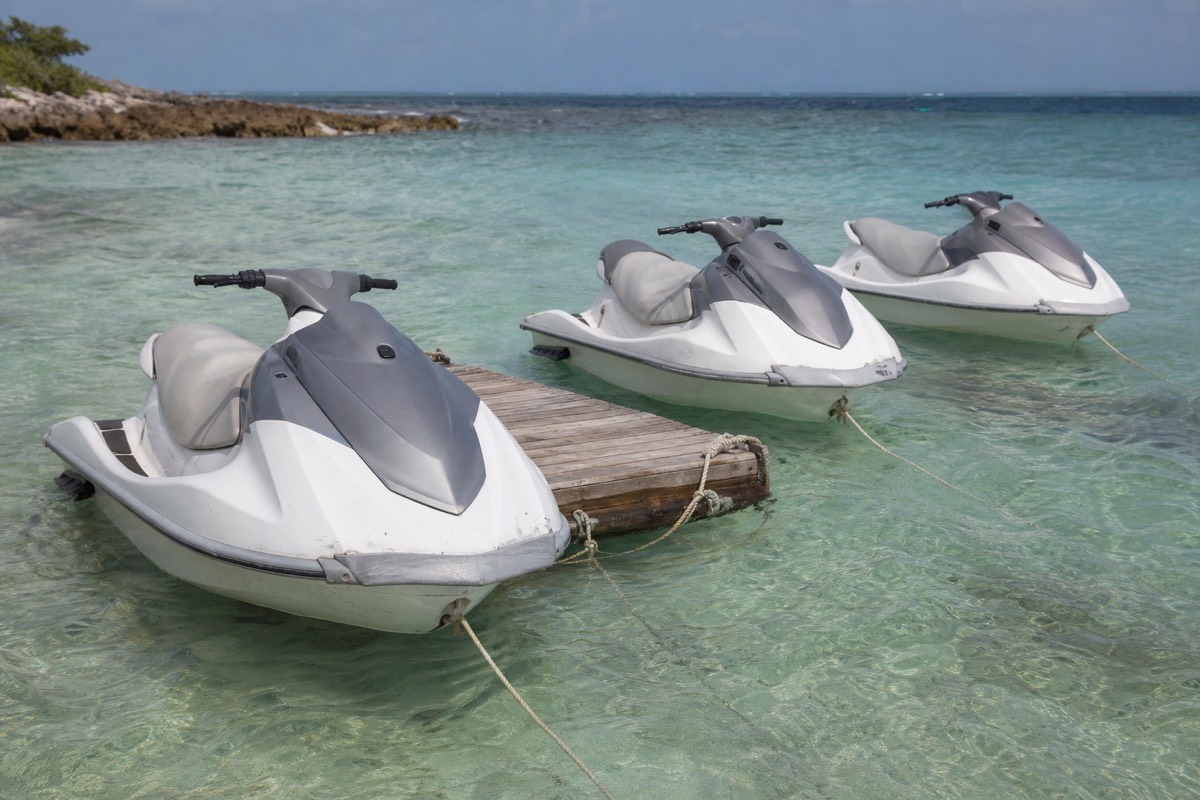
The US advisory flags the Bahamian water-sports rental industry as poorly regulated, with frequent boating accidents, and it singles out jet skis. It also records reported sexual assaults by jet-ski operators against tourists. That is unusually specific language for a travel advisory, and it is worth taking at face value.
Rental jet skis in Nassau run roughly $120 to $200 an hour and are sold hard on the busier beaches. We do not sell them and would not. The failure mode described in the advisory is not mainly about the machine. It is about who you are alone on the water with, and about damage claims after the fact when there is no contract, no insurance and no meaningful oversight. Parasailing and other beach-front rentals sit in the same lightly regulated bracket, which is why our rundown of Nassau water activities separates operator-run boat trips from walk-up rentals. Anything with a licensed crew, a fixed departure and a published booking record is a different category of thing.
Is the Straw Market worth your time?
About ten minutes, if you enjoy haggling. What passengers consistently report is that the Straw Market on Bay Street sells mostly imported souvenirs rather than Bahamian craft, and that it is hot, crowded and high pressure. It is not a scam. It is just not the local market people picture.
Some genuine straw work and wood carving is there if you look, and the vendors are used to being bargained with, so the first price is rarely the price. Go in expecting a market experience rather than a shopping one and it is fine. Go in expecting handmade Bahamian goods at fixed honest prices and you will come out disappointed, which is exactly the pattern in the reviews.
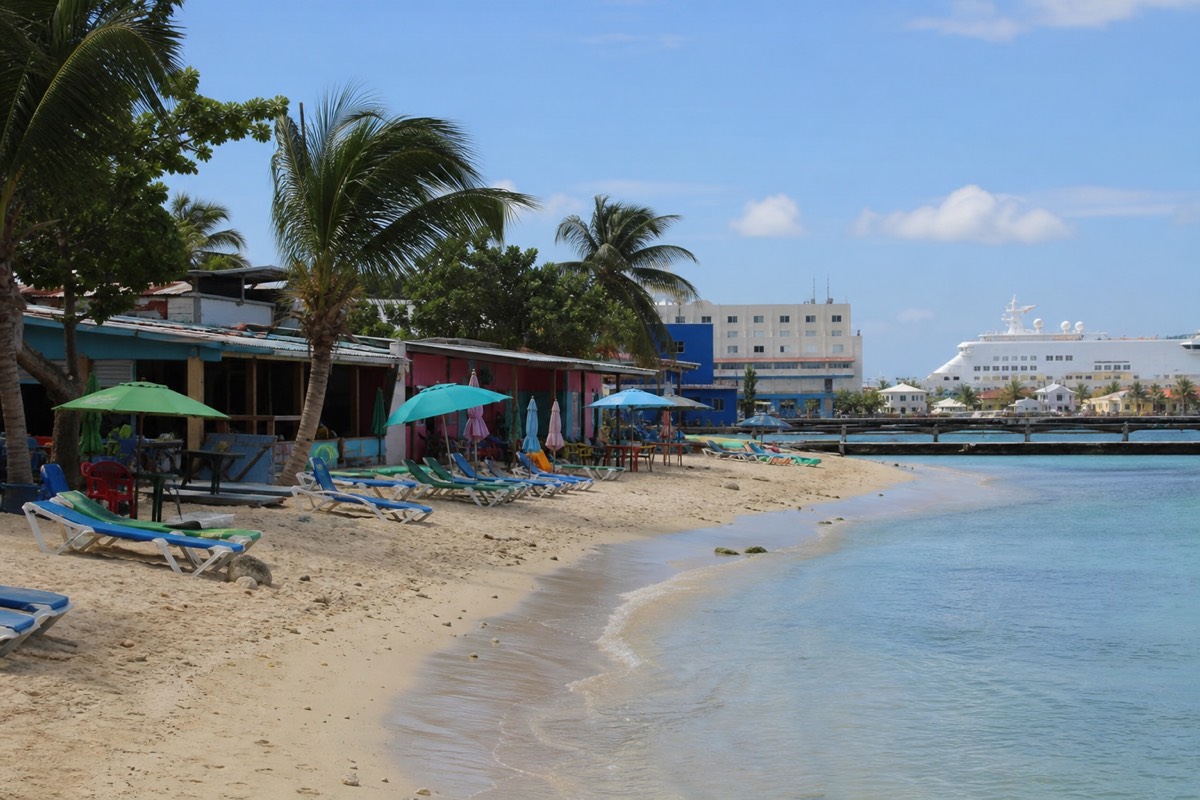
Junkanoo Beach is the same shape of complaint. It is the closest sand to the ship, free to walk onto, with chairs from about $10, and it is also loud, busy and worked hard by sellers on multi-ship days. Plenty of people have a good hour there. Nobody describes it as quiet.
What to avoid, and what to do instead
Every row below is a real, repeated complaint rather than a hypothetical. The right-hand column is what regular visitors actually do about it.
| Avoid | Why | What to do instead |
|---|---|---|
| Over the Hill, south of Shirley Street | Named in the US advisory as the area to stay alert in | Stay in the downtown and harbor-front grid, or take a guided trolley route |
| Jet ski and beach water-sports rentals | Advisory flags poor regulation, frequent accidents and reported assaults by operators | Book a crewed boat trip such as the Rose Island day or the swimming pigs trip |
| Getting into a taxi without a quoted fare | Taxis are unmetered, and this is the most common money dispute reported | Agree the fare before you get in, or use the $1.25 jitney |
| Walking anywhere after dark | The one time-of-day caution that applies across the island | Take a taxi, and finish independent walking in daylight |
| Treating the Straw Market as a shopping stop | Mostly imported goods, high pressure, hot and crowded | Give it ten minutes, then walk on to Parliament Square |
| Freelancing on a four to six ship day | Congestion, vendor pressure and long taxi queues | Have something booked before the gangway opens |
What is not a problem in Nassau
The port itself, Bay Street in daylight and organized tours are the three parts of a Nassau day that almost nobody complains about. The redeveloped cruise port opened in 2023 with six berths, more than 60 retail units, restaurants, a Junkanoo museum and shaded seating, and it is the single most praised thing in recent passenger reviews.
From the gangway, Bay Street is about a five minute walk, the Queen's Staircase about thirteen, and Junkanoo Beach about fifteen. That whole corridor is busy, policed and full of other passengers in daylight, which is why walking out of the port on your own is a reasonable plan for a few hours and why what the port itself now holds matters more than it used to. If you would rather see the historic sites without working out routes, the 2½-hour cultural trolley run covers the Queen's Staircase, the forts and Junkanoo Beach at a fixed price, and the small-group rum and food walk caps at twelve guests and handles the downtown streets on foot with a guide.
Two footnotes. The Royal Bahamas Police Force publishes its own crime statistics, and reading them alongside the advisory is a better guide than either alone, so we link the force's own reporting rather than paraphrasing it. And if the comparison in your head is with the quieter out islands, we have looked at how Exuma compares with Nassau separately. Across the nine tours we list, the pattern that shows up in the reviews is consistent: the days people rate worst are the unplanned ones.