Things to Do in Nassau, Bahamas: Fees, Hours and Real Access
Nassau's best-known landmark is free and thirteen minutes on foot from the cruise gangway. Most of the rest of the list is not, so here are the real numbers.
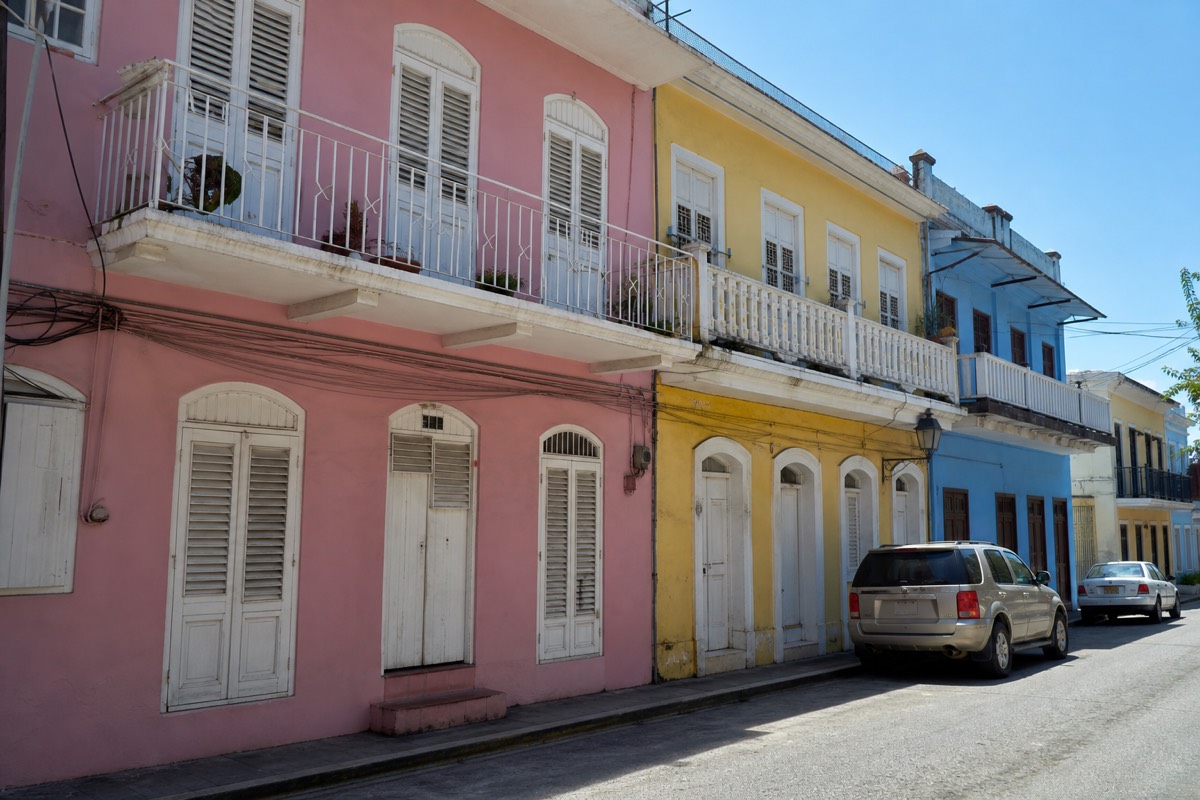
Nassau's best-known landmark costs nothing. The Queen's Staircase is 65 steps today, originally 66, cut out of a single limestone ridge by enslaved workers between 1793 and 1794, about 31 m from bottom to top, free to walk, and open daily from roughly 8:00 to 17:00. It is about thirteen minutes on foot from the cruise gangway.
Booking facts checked September 12, 2026. Dollar amounts and booking counts below are historical planning examples, not current quotes. Use the rechecked booking choices for your date and confirm the exact option and meeting point.
Choose a paid experience that adds to the free downtown highlights. Start with the experience, then compare the actual date, party total and departure details.
Starting choice: Explore Private Pirate Jeep sightseeing 3h · Your own driver-guide links the Queen’s Staircase, caves, Graycliff and John Watling’s in an air-conditioned Jeep.
Most of the rest of the list is not free, and the gap between the free things and the paid things in Nassau is unusually wide. Fort Montagu is about $2. Fort Charlotte is about $5. The Pirates of Nassau museum is about $14 and Clifton Heritage National Park about $16.50. Knowing which is which before you go changes how you spend a day here more than any itinerary advice could.
This page runs through the attractions themselves rather than the cruise-day logistics, which have their own page. Every entry gets the real fee, the real hours where they are published, and an honest note on whether you can reach it on foot or whether you need the tour that goes there.
What Nassau's paid sites actually charge
Fees are the current published non-resident rates and are worth confirming on the official pages before you set out.
What is a must do in Nassau, Bahamas?
Three things, and only one of them costs money. Walk the Queen's Staircase and Fort Fincastle above it. Eat conch somewhere Bahamians eat it, which means Arawak Cay or Potter's Cay rather than Bay Street. And get on the water, because the shallow bank around New Providence is the reason the island looks the way it does.
That short list survives contact with reality better than the long ones. The Queen's Staircase and Fort Fincastle sit together at the top of Elizabeth Avenue, the fort built in 1793 and shaped like a paddle-wheel steamer, with guided tours running roughly 8:00 to 16:00. From the top you get the harbor, the ships and Paradise Island in one view, which is the photograph most people came for without knowing it.
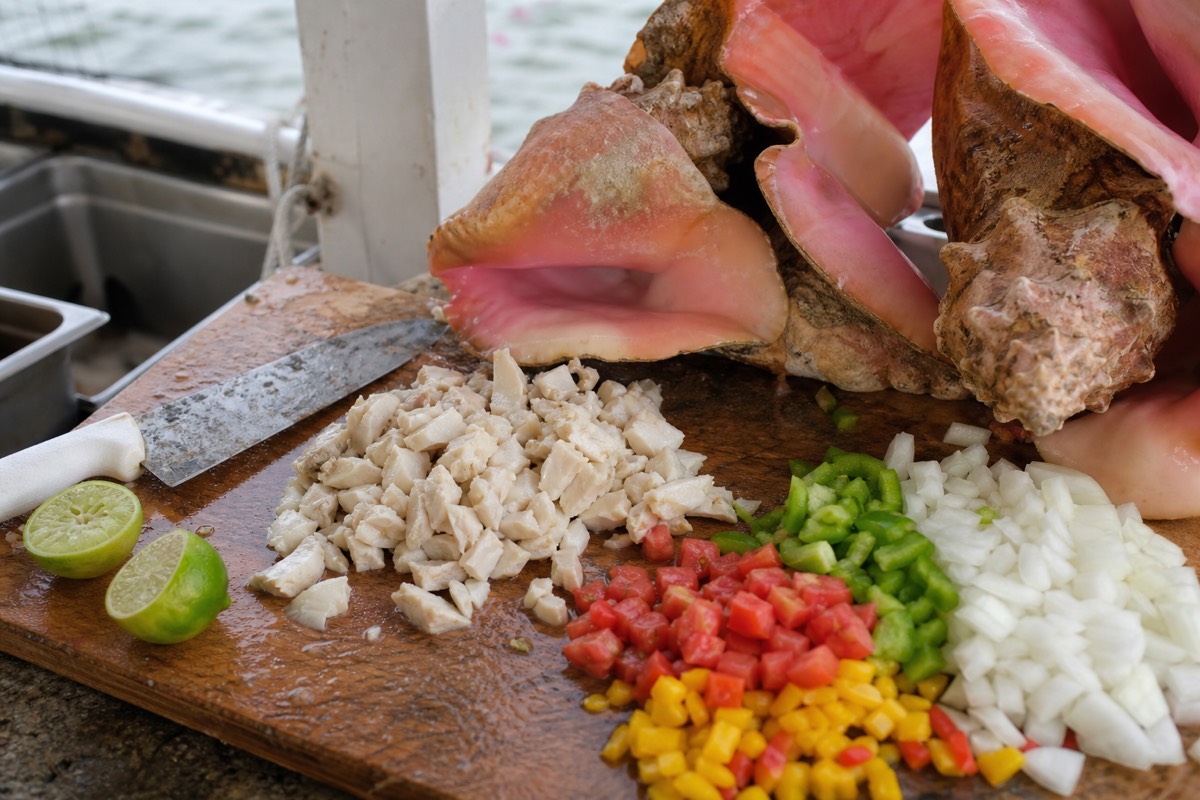
The conch is not a formality either. It is the defining Bahamian food, served as conch salad, conch fritters, cracked conch and stewed conch, and the harvest is regulated to the point that a well-formed flared lip is required and the species is CITES-listed. Eating it at the Arawak Cay Fish Fry on West Bay Street, where the stalls make it in front of you, is a different experience from eating it in a hotel.
- The Queen's Staircase and Fort Fincastle, free and about thirteen minutes' walk from the port.
- Conch at Arawak Cay or Potter's Cay, under the Paradise Island bridge.
- A half day on the water, whether that is reef, turtles, pigs or just a beach club.
- A rum tasting at John Watling's on the Buena Vista Estate, free entry, daily 10:00 to 18:00.
What is the main attraction in the Nassau, Bahamas?
The Queen's Staircase, by any measure that matters. It is the most visited, the most photographed, the most written about and one of the very few genuinely free major sites in the city. Sixty-five steps, cut 1793 to 1794, about 31 m high, open daily roughly 8:00 to 17:00. It is also a fifteen-minute stop on the trolley tour and the pirate Jeep route.
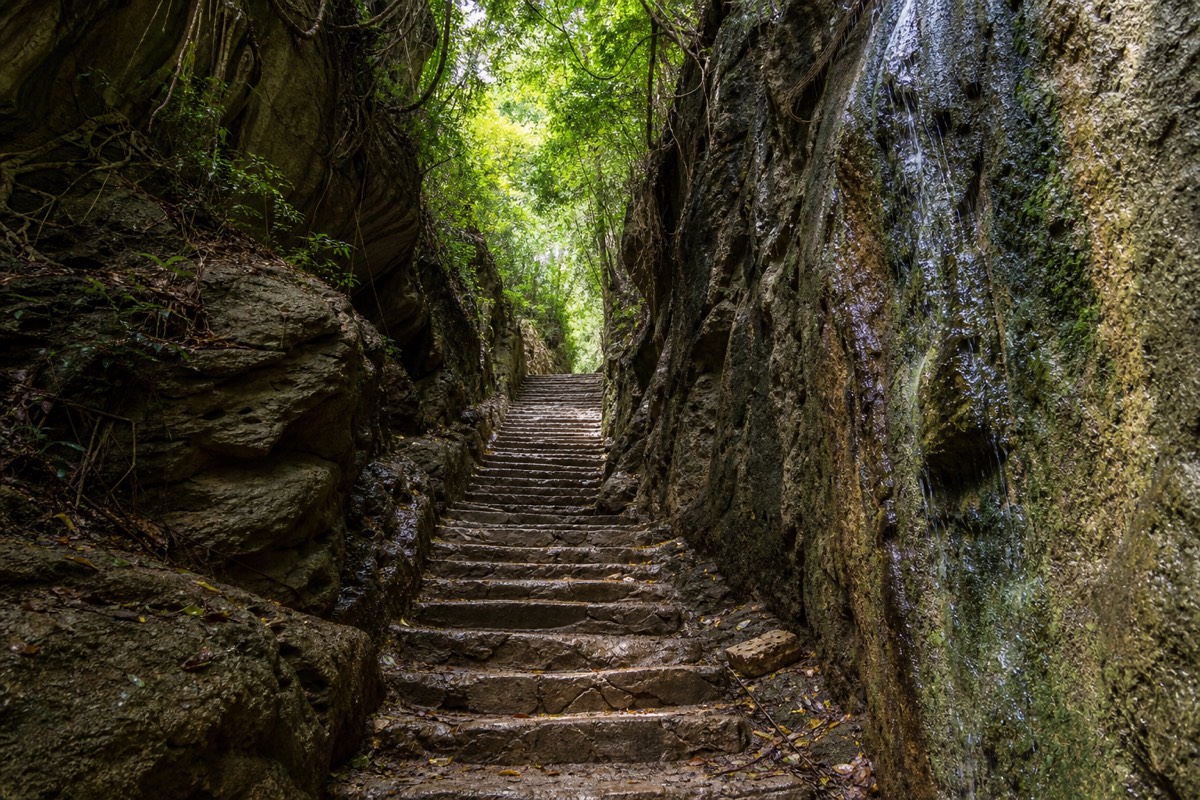
The number is worth getting right because almost every source gets it wrong in one direction or the other. There were originally 66 steps. There are 65 today. The staircase was carved through solid limestone by enslaved workers over roughly a year, connecting Fort Fincastle above with the town below, and the walls hold the temperature down noticeably even at midday. The official destination listing covers access and location.
Two practical notes. It is uphill from Bay Street and the last section is steep, so it is not a gentle walk in August heat. And it is a magnet for vendors, which is the most consistent complaint cruise passengers make about the whole downtown area. A firm no works. The electric trolley tour includes a fifteen-minute stop here and drives past Government House, the National Art Gallery and Fort Charlotte, which is a reasonable way to see it without the hill.
Nassau's three forts, and which one is worth your hour
Fort Charlotte is the biggest, Fort Montagu is the oldest and Fort Fincastle is the one with the view. If you only do one, do Fincastle, because it is attached to the Queen's Staircase and overlooks the harbor. If you want the most fort for your money, Charlotte at about $5 is the answer.
All three are British colonial defenses from the eighteenth century, built when Nassau had recently stopped being a pirate base and started being a naval concern. Fort Montagu came first in 1741, at the eastern end of the harbor, and it is the smallest and quietest of the three. Fort Charlotte followed in 1789, west of downtown, and is the largest, with dry moats and tunnels. Fort Fincastle in 1793 is the odd one, a squat paddle-wheel-steamer shape on the ridge above the Queen's Staircase.
| Fort | Built | Entry | Hours | Why go | How you get there |
|---|---|---|---|---|---|
| Fort Fincastle | 1793 | guided tours available | roughly 8:00 to 16:00 | Harbor view, paddle-wheel shape, sits directly above the Queen's Staircase | Walk, about 13 minutes from the gangway |
| Fort Charlotte | 1789 | about $5 | roughly 8:00 to 16:00 | The largest of the three, moats and tunnels, west of downtown | A drive-past on the trolley route, a stop on the ATV route |
| Fort Montagu | 1741 | about $2 | not published | The oldest, smallest and quietest; east end of the harbor | On the ATV tour route; taxi or jitney otherwise |
The current ATV listing includes third-party liability insurance and has eliminated its fuel surcharge. Do not add the former $69.95 insurance and $22 fuel charges to a new quote. Damage to the vehicle or driver is not covered; lunch and any private-residence transfer can cost extra. Drivers must be at least 21 with a valid licence. Related editorial: Fort Charlotte's official page ATV tour
What is worth seeing in the Nassau, Bahamas?
Beyond the forts, four places carry the city's actual history: John Watling's Distillery on the 1789 Buena Vista Estate, the Graycliff mansion of 1740, the Pirates of Nassau museum, and the National Art Gallery of The Bahamas. Two of the four are free or nearly so, and all four are downtown.
John Watling's sits at 17 Delancy Street with free entry, open daily 10:00 to 18:00, and runs tours, tastings, a shop and a bar out of a restored estate house. Graycliff, a colonial mansion built in 1740, is now a hotel, restaurant, chocolatier and cigar house, and its chocolate operation is a stop on the pirate Jeep route. The Pirates of Nassau museum on the corner of King and George Streets is the family option and the one that puts the 1696 to 1720 pirate era into some order.
| Site | Where | Entry | Hours | What it is |
|---|---|---|---|---|
| John Watling's Distillery | 17 Delancy Street, Buena Vista Estate | free | daily 10:00 to 18:00 | Small-batch Pale, Amber and Buena Vista rums, tours, tastings, shop and bar |
| Pirates of Nassau museum | King and George Streets | about $14 | Mon to Fri 9:00 to 17:00, Sat and Sun 9:00 to 15:00 | The 1696 to 1720 pirate era, indoors and air-conditioned |
| National Art Gallery of The Bahamas | downtown | about $10 | Tue to Sun 10:00 to 17:00 | Bahamian art in a colonial house; a drive-past on the trolley route |
| Educulture Junkanoo Museum | West Street, downtown | not published | weekdays | Junkanoo costumes, drums and craft, open year-round |
| Graycliff | West Hill Street | not an admission site; you pay per outlet | varies by outlet | 1740 mansion, hotel, restaurant, chocolatier and cigar house |
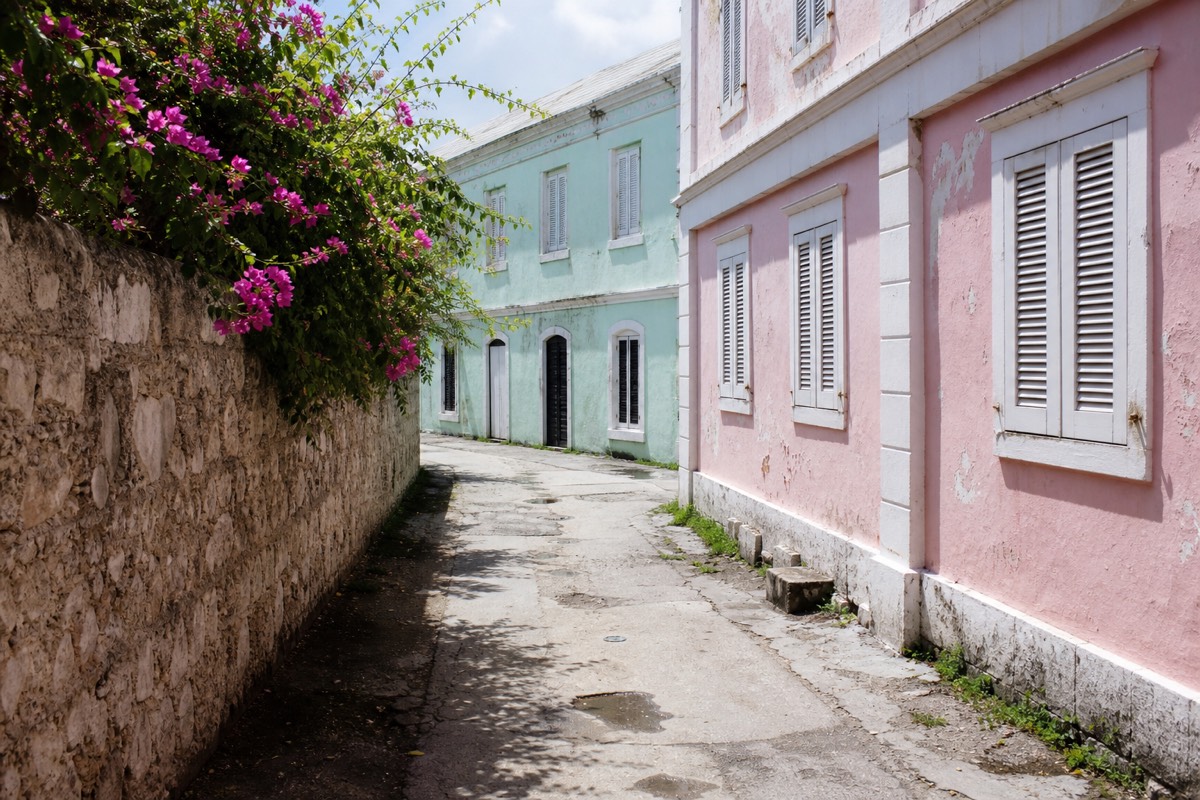
| Government House | Mount Fitzwilliam | free from outside | exterior any time | 1801 pink-and-white colonial architecture, a stop on the pirate Jeep route |
The National Art Gallery's admission page carries current pricing and opening days, and it is the one on this list most likely to be shut when you turn up unplanned, since it closes on Mondays.
What is Nassau, Bahamas best known for?
Pirates, turquoise water, Junkanoo and rum, in roughly that order of how often people mention it and reverse order of how much of it you can actually see on a given day. The pirate era was real and brief: Nassau was a pirate base from 1696 to 1720, with Blackbeard, Calico Jack and Anne Bonny operating out of the harbor.
The water is the more honest answer. New Providence sits on the shallow Great Bahama Bank, and the color everyone photographs comes from white limestone sand under shallow water rather than from anything in the water itself. That geology is why the cays 15 to 45 minutes offshore look the way they do, and why the snorkeling here is clear and warm rather than dramatic. Our own published line on that is deliberately unglamorous: the reef is healthy by Caribbean standards but not the most visually striking in the region, and what it reliably delivers is clear water, plenty of tropical fish and the sea turtles at Green Cay.
Rum is the fourth pillar and the most under-visited. Nassau was a major hub for US Prohibition rum-running between 1920 and 1933, with Bill McCoy, the original "the real McCoy", and Gertrude "Cleo" Lythgoe working out of the harbor. Several downtown buildings that now sell souvenirs were liquor lockups. The rum tasting and food walking tour is built on exactly that history and finishes inside The Lucerne, a private speakeasy you cannot otherwise get into. It takes 12 guests. The identity question gets a fuller answer on what Nassau is best known for.
What are some good city tours in Nassau?
The private Jeep’s current itinerary lists stops at Nassau sights including the Queen’s Staircase, the Caves, Graycliff and John Watling’s. Several other places are drive-pasts: do not count Arawak Cay as an included meal stop or Cable Beach as swimming time. Confirm admissions for the option selected.
The trolley is the volume option and the cheapest way to see the spread of the city: the Bahamas Rum Cake Factory for a ten-minute tasting, 30 minutes at the Atlantis grounds, fifteen minutes at the Queen's Staircase, drive-pasts of Government House, the National Art Gallery and Fort Charlotte, a tasting at Tasty Teas Bahamas, a pass by the Arawak Cay stalls and fifteen minutes at Junkanoo Beach. Conch fritters, Bahamian treats, bottled water and Sky Juice samples are in the price.
| Attraction | Trolley, $55 | Pirate Jeep, $165 | ATV, $99 plus fees | Rum and food walk, $98 | On foot, free |
|---|---|---|---|---|---|
| Queen's Staircase | 15-minute stop | 15-minute stop | Route stop | No | Yes, about 13 minutes' walk |
| Fort Charlotte | Drive-past | No | Route stop | No | Not walkable, about $5 entry |
| Fort Montagu | No | No | Route stop | No | Not walkable, about $2 entry |
| Government House | Drive-past | Stop, 1801 architecture | Route stop | No | Yes, from outside |
| John Watling's Distillery | No | Stop | Guided entry | Stop with tastings | Yes, free entry, 10:00 to 18:00 |
| Graycliff | No | Chocolatier stop | No | Heritage Village marketplace | Yes, on foot from Bay Street |
| Arawak Cay Fish Fry | Pass by the stalls | Stop | No | No | Not walkable from the port |
| Caves of New Providence | No | Stop | No | No | Not walkable |
| Junkanoo Beach | 15-minute stop | No | 40-minute beach break | No | Yes, about 15 minutes' walk |
| Atlantis grounds | 30 minutes | No | No | No | Water taxi, $4 to $7 |
The private pirate Jeep tour is the one that reaches things you cannot otherwise get to easily, including the Caves of New Providence, which are Lucayan hurricane shelters now holding fruit bats. All admissions to the historic sites are in the price and the vehicle is private and air-conditioned, which on a July afternoon is not a minor detail. Route detail for all four sits in our guide to Nassau city and history tours.
Where do you eat in Nassau, and what is actually Bahamian?
Arawak Cay on West Bay Street, known universally as the Fish Fry, and Potter's Cay under the Paradise Island bridge. Those are the two places where Bahamians eat Bahamian food, and they are both rows of stalls and small restaurants rather than restaurants in the hotel sense. Bay Street feeds cruise passengers; these two feed the island.
The vocabulary is worth learning before you order, because half of it is not obvious. Conch turns up four ways. Sky Juice, also called Gully Wash, is gin, coconut water, sweetened condensed milk and nutmeg, and it is on the trolley tour as a sample. Switcha is Bahamian limeade made with key limes or lemons. Johnny cake, peas and rice, grits, fried plantain and stewed fish fill out the rest of a plate. Kalik is the local beer and the Goombay Smash is the other cocktail everyone orders.
| What to order | What it is | Where |
|---|---|---|
| Conch salad | Raw conch diced with citrus, onion and pepper, made in front of you | Arawak Cay, Potter's Cay |
| Conch fritters | Battered and fried; the version most visitors meet first | Everywhere, including the trolley tour |
| Cracked conch | Tenderised, breaded and fried, served with peas and rice | Arawak Cay |
| Sky Juice or Gully Wash | Gin, coconut water, condensed milk, nutmeg | Arawak Cay; sampled on the trolley tour |
| Switcha | Bahamian limeade, key limes or lemons, water, sugar | Stalls and shacks island-wide |
| Johnny cake and stewed fish | The standard Bahamian breakfast plate | Potter's Cay, Arawak Cay |
| John Watling's rum | Small-batch Pale, Amber and Buena Vista | 17 Delancy Street, free tours and tastings |
Neither Arawak Cay nor Potter's Cay is within walking distance of the cruise port, and the trolley only passes the Arawak Cay stalls rather than stopping. If eating properly is the point of your day, the food, rum and Junkanoo guide maps it out and the three-hour walking tour handles the drinking side.
Which Nassau attractions are free, and which are worth paying for?
The free list is longer and better than the paid list, which is unusual for a Caribbean capital. The Queen's Staircase, Junkanoo Beach, the Straw Market, Government House from outside, Potter's Cay, John Watling's and every public beach cost nothing. The paid list tops out at $16.50.
| Free | What you get | Paid | Cost |
|---|---|---|---|
| Queen's Staircase | 65 steps, 31 m, cut 1793 to 1794, daily roughly 8:00 to 17:00 | Clifton Heritage National Park | about $16.50 for non-residents |
| Junkanoo Beach | Closest public beach to the port, free entry, chairs from about $10 | Pirates of Nassau museum | about $14 |
| Straw Market, Bay Street | Daily roughly 8:00 to 20:00, straw goods, hats, bags, carvings | National Art Gallery | about $10 |
| John Watling's Distillery | Free entry, tours and tastings, daily 10:00 to 18:00 | Fort Charlotte | about $5 |
| Government House, from outside | 1801 colonial architecture on Mount Fitzwilliam | Fort Montagu | about $2 |
| Cable Beach, Love Beach, Goodman's Bay, Jaws Beach | Public and free; jitney $1.25, taxi to Cable Beach about $18 to $24 | Atlantis Aquaventure day pass | from about $195 adult, $95 child aged 4 to 12; we sell nothing there |
Be honest with yourself about the Straw Market before you build a morning around it. What passengers consistently report is that it is mostly imported souvenirs rather than local craft, hot, crowded and high pressure. It is worth twenty minutes and a firm no, not two hours.
What can you see on foot in two hours?
More than most ports allow. From the gangway, Bay Street is about five minutes, the Queen's Staircase about thirteen and Junkanoo Beach about fifteen. A two-hour loop covering the Straw Market, Parliament Square, the Queen's Staircase, Fort Fincastle and a drink back on Bay Street is comfortable at a normal pace.
| Stop | Walk time from the gangway | Time to spend | Cost |
|---|---|---|---|
| Bay Street and Parliament Square | about 5 minutes | 20 to 30 minutes | free |
| Straw Market | about 5 minutes | 20 minutes | free to browse |
| Queen's Staircase | about 13 minutes | 15 to 20 minutes | free |
| Fort Fincastle | directly above the staircase | 20 to 30 minutes | guided tours available, roughly 8:00 to 16:00 |
| John Watling's Distillery | a short walk uphill from Bay Street | 30 to 45 minutes | free entry |
| Junkanoo Beach | about 15 minutes | as long as you like | free entry, chairs from about $10 |
The port itself absorbs time too, and unusually for a cruise terminal that is not a complaint. The redeveloped facility has 60 or more retail units, restaurants and bars, a Junkanoo museum, an open-air amphitheater, Wi-Fi, a pharmacy and shaded seating. Walking radius, ship timings and the return buffer are covered properly in the Nassau cruise port guide, and a full worked day sits on what you can do with one day in Nassau.
The beaches, at a high level
Junkanoo Beach is the one you can walk to, Cable Beach is the one most people mean, Cabbage Beach on Paradise Island is the postcard, and Love Beach is the quiet one with decent shore snorkeling. All four are public and free to enter; what costs money is getting there and sitting down.
| Beach | Where | Getting there | Notes |
|---|---|---|---|
| Junkanoo Beach | Just west of downtown | 2 to 15 minutes on foot | Free, chairs from about $10, bars, music and vendors; crowded and noisy on multi-ship days |
| Cable Beach | About 9.2 km west of downtown | Jitney #10 at $1.25, taxi about $18 to $24 | Public and free, long and wide |
| Cabbage Beach | Paradise Island | Taxi about $7 per person, or the water taxi at $4 to $7 | Public sections free, but some access points are restricted and the resort frontage is private |
| Love Beach | Northwestern coast | Taxi | Public, free, quieter, good shore snorkeling |
| Goodman's Bay | Just west of downtown | Jitney or taxi | Public beach park, popular with locals |
| Jaws Beach | Western New Providence, near Clifton Heritage | Taxi | Public and free, quiet, at the far end of the island |
Junkanoo Beach doubles as a tour stop: it is the 40-minute beach break on the ATV route and a fifteen-minute stop on the trolley. The detail on sand, shade, facilities and which beach suits which kind of day belongs to the Nassau beaches guide rather than here.
Clifton Heritage, Ocean Atlas and the caves
The western end of New Providence holds the two attractions that most visitors never reach: Clifton Heritage National Park at about $16.50 for non-residents, home to the Ocean Atlas underwater sculpture and shore snorkeling, and the Caves of New Providence, Lucayan hurricane shelters that now hold fruit bats. Neither is walkable and only one is on a tour route.
Clifton Heritage covers Lucayan, plantation and emancipation history on one coastal site, and the Ocean Atlas sculpture sits in shallow water just offshore, which makes it one of the few snorkel targets on the island you can reach without a boat. Jaws Beach is next door and free. Between them they make a half day, and the taxi ride out is the main cost after the entry fee.
The caves sit closer to town, on the pirate Jeep route, and are the kind of stop that reads as filler on a listing and turns out to be one of the more memorable ten minutes of the day. They were shelter for the Lucayan people during hurricanes long before any European arrived. If shallow-water snorkeling is what you are after, the reef options and where they actually are sit in our Nassau snorkeling guide.
Junkanoo, and when you can actually see it
Junkanoo is the street parade that defines Bahamian culture: drums, cowbells, brass and costumes built from cardboard and crepe paper, with groups competing for prizes along Bay Street. The main parades run on Boxing Day, 26 December, and New Year's Day, both starting in the small hours. Every other day of the year, you see it in a museum.
That timing is the honest catch, and it is why the Educulture Junkanoo Museum on West Street exists. It runs year-round on weekdays, holds costumes and drums, and it is the closest thing to the real event available in July. The cruise terminal also has its own Junkanoo museum inside the redeveloped port, which is free to walk through while you wait.
If you are in Nassau in late December, rearrange your plans around it. The parade starts in the dark, runs along Bay Street and is the single loudest, most colorful thing that happens on this island. If you are here at any other time, the museum plus a rum tasting is the sensible substitute, and both sit inside walking distance of the port. Every tour we sell, with its published price, rating and booking count, is listed on the full set of tours in Nassau Bahamas.