Swimming with the Pigs Near Nassau: Rose Island, Not Exuma
The updated booking comparison includes verified Exuma day trips to Big Major Cay as well as shorter Nassau-area alternatives. The Exuma boat route takes about eight hours plus transfers and check-in, so choose it for a hotel-stay day rather than a cruise call.
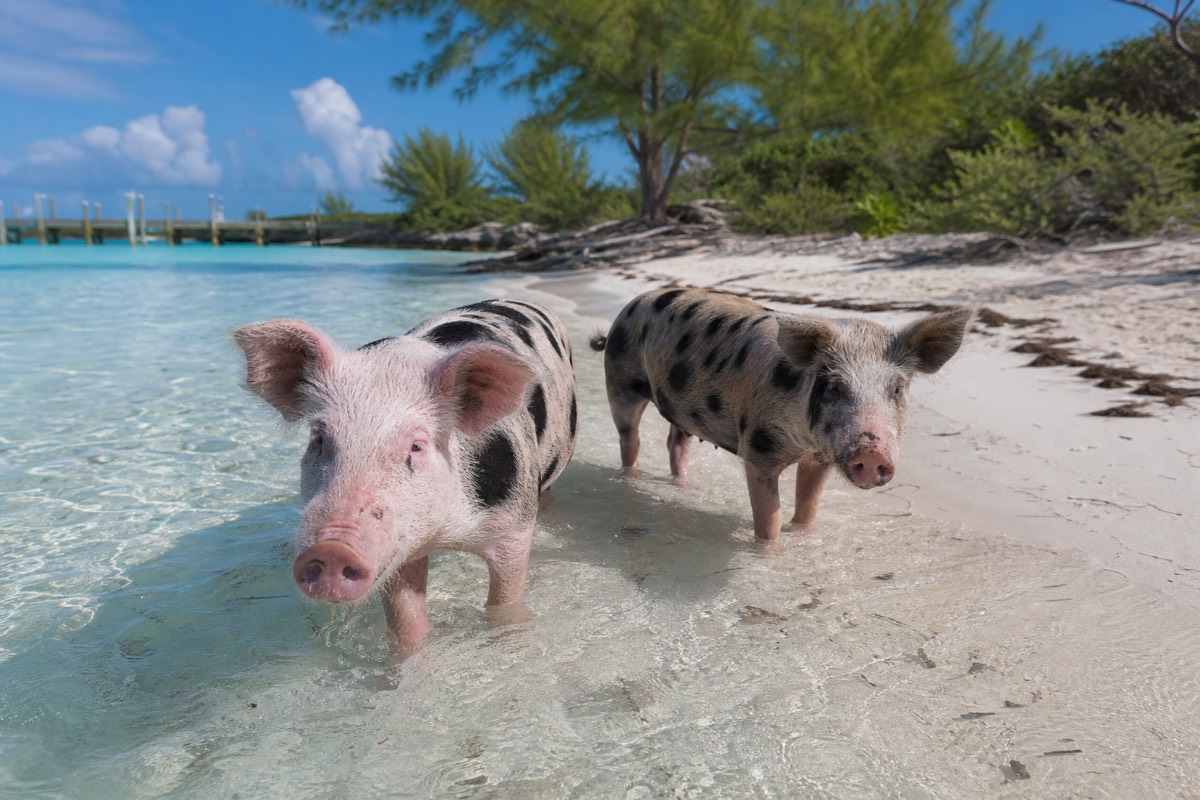
Two completely different beaches get called Pig Beach, and confusing them is the single most common mistake first-time visitors to Nassau make. One is about 25 minutes away by boat. The other is roughly 129 km south, needs about three hours of speedboat in each direction, and costs three to seven times as much to reach.
Booking facts checked September 12, 2026. Dollar amounts and booking counts below are historical planning examples, not current quotes. Use the rechecked booking choices for your date and confirm the exact option and meeting point.
Choose the near-Nassau pig encounter while keeping Exuma separate. Start with the experience, then compare the actual date, party total and departure details.
Starting choice: Explore Rose Island pigs & beach club 4h · Pig encounter, Bahamian lunch, snorkel equipment and paddleboards in one four-hour beach day.
The pigs near Nassau are real, the water is the same color, and the encounter is genuine. What they are not is the Exuma colony from the photographs that made this famous. If you book expecting one and get the other, no amount of turquoise will fix the feeling, which is why this page starts with geography rather than price.
Everything below covers the Nassau-area encounter: which cays actually hold pigs, how long the boat run is, what the $129 beach-club trip and the $195 three-island day include, how much of a four-hour day is actually spent with the animals, and what the welfare record looks like once you read past the captions.
Boat time to the pigs, Nassau against Exuma
Travel time is the whole reason the Nassau trip costs $129 and the Exuma trip costs $260 to $900.
Can I swim with the pigs in the Nassau, Bahamas?
Yes. Three cays within easy reach of Nassau harbor hold pig colonies: Rose Island, Pearl Island and Athol Island. Rose Island is the one the tours on this site visit, about 25 minutes out by boat. Blue Lagoon Island, which people often assume has pigs, does not; it runs a dolphin operation.
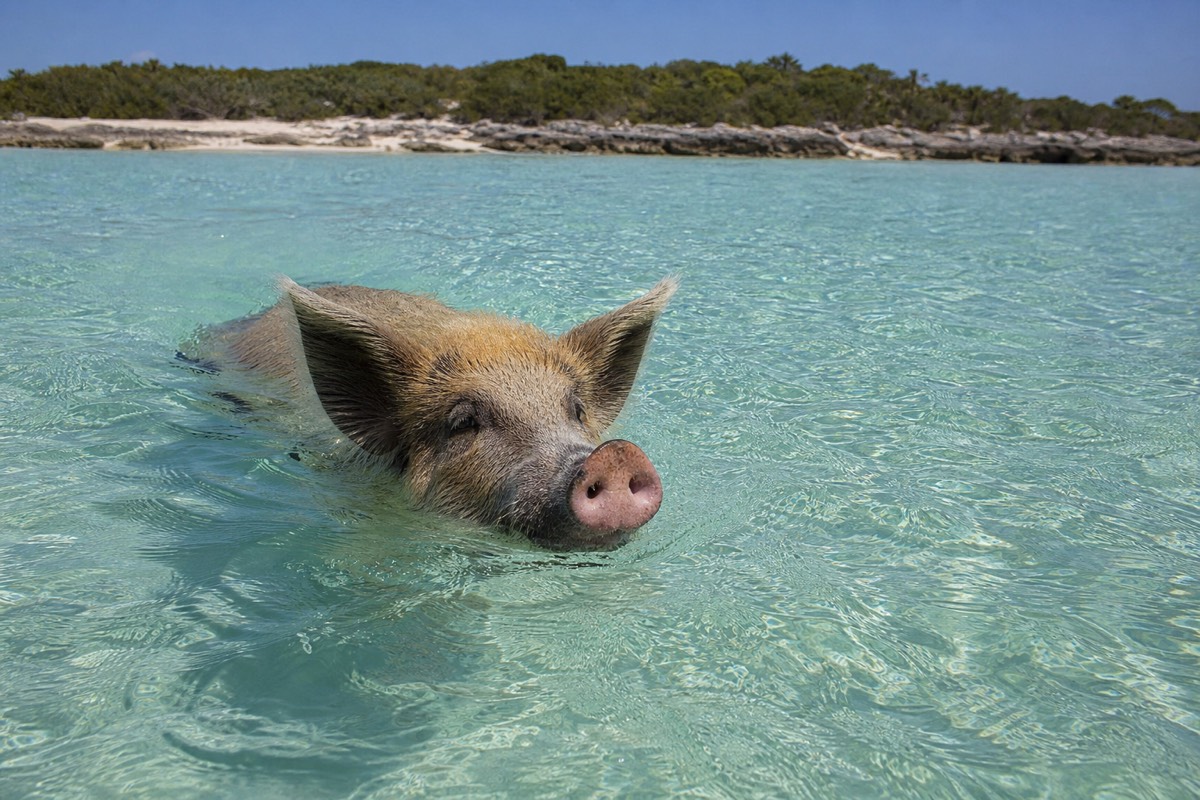
Rose Island is a long thin cay east of Paradise Island, roughly 14.5 km end to end, with several beach-club operators along it. The pig colony sits at one of those beach clubs, and both pig tours we sell — the beach-club escape and the three-island day — land there. Pearl Island is a private cay with a lighthouse, beaches and snorkeling, and it is the reef stop on the three-island route. Athol Island is uninhabited, a shallow marine-park style area of clear water and coral just off Nassau with mangroves along one edge.
| Cay | Boat time from Nassau | Pigs? | What else is there |
|---|---|---|---|
| Rose Island | about 25 minutes | Yes, at the beach clubs | Private beach clubs, the 007 Beach Club, reef snorkeling, a 14.5 km cay |
| Pearl Island | a short run, on the three-island route | Yes | Lighthouse, beaches, about an hour of reef snorkeling on the three-island tour |
| Athol Island | just off Nassau | Yes | Uninhabited, shallow coral, the Sea Gardens area, mangrove shoreline |
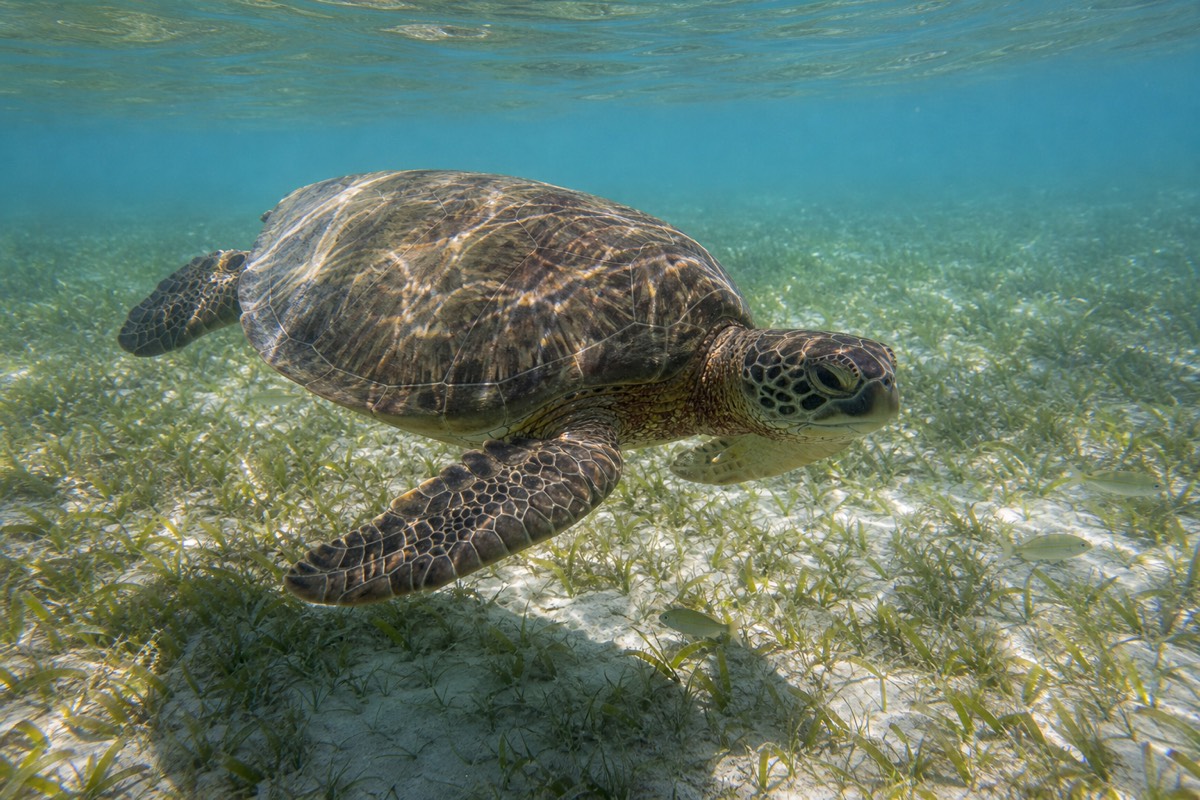
| Green Cay | on the same boat routes | No | Seagrass beds and wild green sea turtles, fully protected under Bahamian law |
| Blue Lagoon Island | about 25 minutes | No | Beaches and dolphin programs; we sell nothing there |
| Big Major Cay, Exuma | about 3 hours by speedboat | Yes, the original colony | About 129 km from Nassau, or a 30-minute flight to Staniel Cay |
The practical consequence is that you do not need a full day, a flight or a charter to meet a pig in the Bahamas. You need a morning and a boat. What you give up is the specific beach in the photographs, and whether that matters is a personal question rather than a factual one. Our guide to Pearl Island and Athol Island covers the other two cays in detail.
How much is it to swim with pigs in the Nassau, Bahamas?
Historical price example: $129 for the four-hour swimming pigs and private beach club trip, or $195 for the four-hour three-island day that adds wild turtles and a full hour of reef snorkeling. Carnival sells its ship version at $159.99 adult and $148.99 child. Reaching the Exuma originals costs $260 to $440 by boat, or $715 to $900 flying.
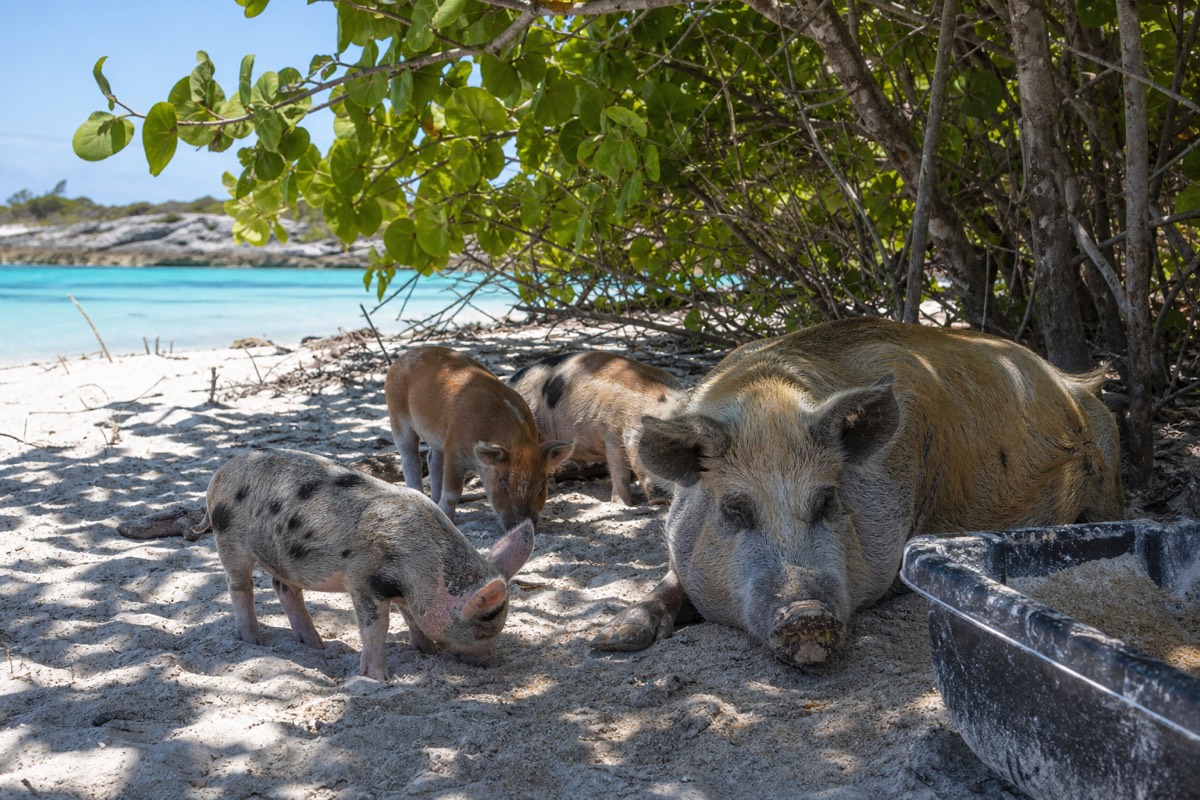
The spread between $129 and $900 is not a quality ladder, it is a distance ladder. Every option on the table below puts you on a beach with pigs. What changes is how much of the day is spent getting there and what else is bolted onto the trip.
| Option | Price | Duration | Pig time | What else you get |
|---|---|---|---|---|
| Swimming Pigs and Private Beach Club Escape | $129 | 4 hours | roughly 15 to 45 minutes | 45-passenger boat from downtown, harbor run past the Pearl Island lighthouse, a 10-minute Green Turtle Cay stop weather permitting, Bahamian lunch and a soft drink, beach club chairs, Wi-Fi, restrooms, snorkel gear and paddleboards |
| Nassau 3 Islands with snorkeling, Pig Beach, turtles and lunch | $195 | 4 hours | roughly 15 to 45 minutes | 40ft speedboat, wild green turtles at Green Cay, about an hour of reef snorkeling at Pearl Island, kayaks, jerk BBQ chicken and Caribbean rice, one rum punch |
| Rose Island Full-Day Adventure | $139 | 4 hours | none listed | Reef snorkeling with instruction, a Green Cay turtle observation stop from the boat deck, the 007 Beach Club with hammocks and an aviary, a light lunch |
| Carnival's ship version | $159.99 adult, $148.99 child | ship excursion | not published | A cruise-line excursion can include return assistance under the cruise line’s terms; do not assume every booking guarantees the ship will wait. With an independent tour, you are responsible for the all-aboard deadline. Reserve two hours before all-aboard plus check-in and transfer time, and compare actual departure times before paying. |
| Exuma day trip by speedboat | $260 to $440 | full day | not published | The original Big Major Cay colony, about 3 hours of boat in each direction. The updated comparison includes verified Exuma options |
| Exuma fly and boat | $715 to $900 | full day | not published | A 30-minute flight to Staniel Cay, then a boat. Context only, not sold here |
Note the Rose Island full-day listing, which visits the same island but publishes no pig stop. It is a reef, turtle and beach-club day. If pigs are the reason you are booking, that is not the listing you want, and a surprising number of people find that out late. The cost question gets its own narrative treatment on what swimming with pigs in Nassau actually costs.
Is swimming with pigs worth it in Nassau?
For most people yes, provided you understand the shape of the day before you pay. The pig encounter runs roughly 15 to 45 minutes depending on the operator and the conditions, inside a four-hour trip. Everything else, the boat, the reef, the turtles, the lunch and the beach club, is what you are actually buying.
That is the honest version, and it is the one that decides satisfaction. People who book a pig tour and treat the other three and a half hours as filler tend to come back flat. People who book a boat day that happens to include pigs tend to come back happy. The tours themselves are the same either way. Only the expectation changed.
The published numbers support the second reading. The swimming pigs and private beach club trip holds a 4.7 rating across 14,083 bookings, which is a strong score for a mass-market boat product. The three-island day has been booked 29,228 times at 4.2, and the gap between those two ratings is instructive: the three-island tour is longer, busier and more ambitious, with three stops crammed into the same four hours.
The second common disappointment is scale. The Nassau-area colonies are small groups of animals on a working beach club, not a wild island overrun with swimming pigs. They are used to people, they come to the water when food appears, and they leave when it stops. That is a pleasant fifteen minutes and a good photograph. It is not a nature documentary, and we would rather say so here than have you discover it at the waterline. The full verdict sits on whether swimming with pigs in Nassau is worth it.
How far is it, and how does Nassau compare with Exuma?
Rose Island is about 25 minutes each way from Nassau harbor. Big Major Cay in the Exumas is about 129 km away, roughly three hours each way by speedboat or a 30-minute flight to Staniel Cay. That is the entire difference, and it explains the whole price spread from $129 to $900.
The Exuma original is the beach that made swimming pigs famous, and it is genuinely worth doing if you have a full day, a strong stomach and the budget. Six hours of open-water speedboat is not a gentle way to spend a day, and on a cruise call it does not fit at all. Flying removes the boat time and adds several hundred dollars. The updated comparison includes verified Exuma options, so treat the comparison below as information rather than a pitch.
| Trip | Distance from Nassau | Travel time each way | Typical cost | What the day looks like |
|---|---|---|---|---|
| Rose Island pigs, Nassau area | a short run east past Paradise Island | about 25 minutes | $129 to $195 | Half a day, morning departure, back downtown for lunchtime or early afternoon |
| Big Major Cay by speedboat | about 129 km | about 3 hours | $260 to $440 | A full day, roughly six hours of it on the water |
| Big Major Cay by air | about 129 km | about 30 minutes flying to Staniel Cay | $715 to $900 | A full day with a short boat transfer at the Exuma end |
For a cruise passenger with a six-hour call, the arithmetic decides itself. For a hotel guest with a spare week, the Exuma trip is a real option and our Exuma Pig Beach day trip guide lays it out honestly, including where it falls down. The short-form comparison lives on how far the swimming pigs actually are from Nassau.
Is swimming with pigs in Nassau safe?
Reasonably, with two caveats that have nothing to do with the boat. These are large domestic animals, not an exhibit, and they behave like animals around food. The second caveat is the water-sports sector generally, which the US State Department describes as poorly regulated in the Bahamas. Licensed tour boats are a different category from rental jet skis, and the distinction matters.
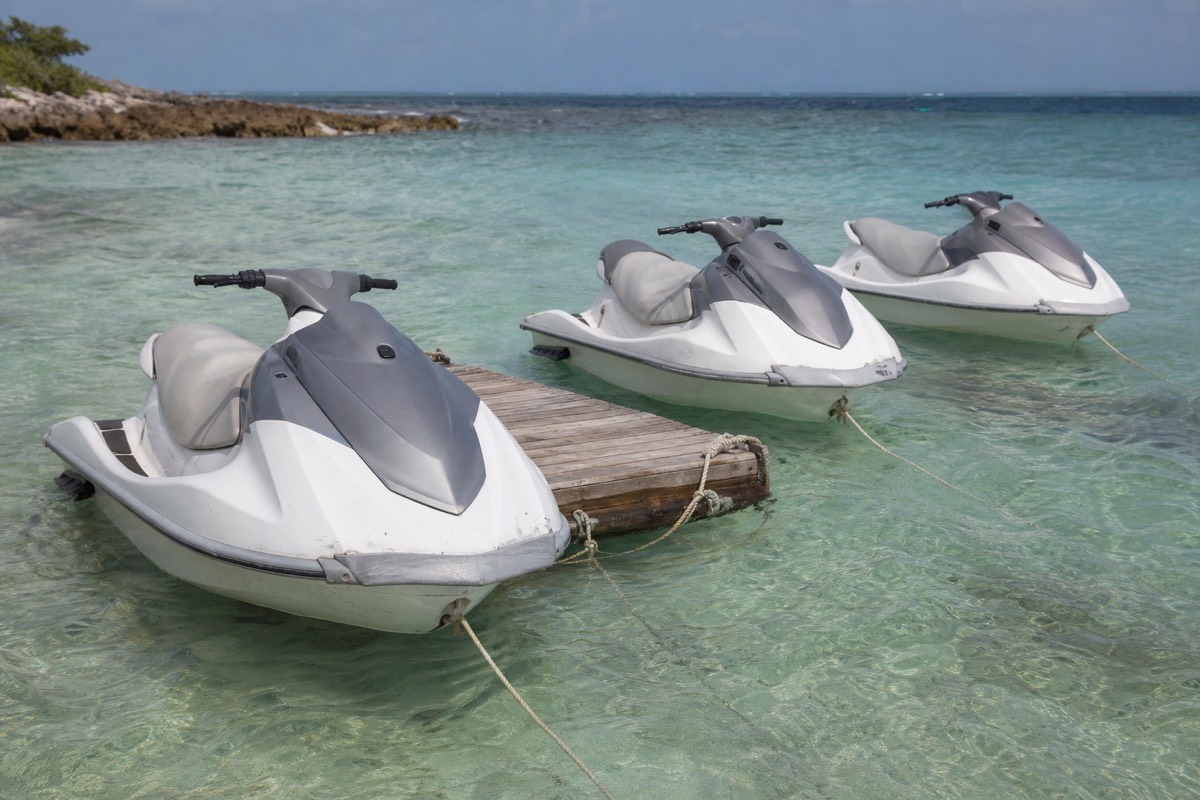
The US advisory for the Bahamas sits at Level 2, Exercise Increased Caution, and it specifically flags the water-sports rental industry, with frequent boating accidents particularly on jet skis. It is pointing at unregulated rentals rather than at crewed excursion boats with life jackets and a briefing, but it is a fair reminder to book an operator with a published safety record rather than whoever is selling on the sand.
Around the animals themselves, the sensible rules are short. Do not get between a pig and its food. Do not hand-feed on the sand, both for your fingers and for the reasons in the welfare section below. Do not chase one for a photograph, and keep small children within arm's reach; a mature pig outweighs most of the people trying to pose with it. The crew will say all of this at the briefing, and the people who get nipped are usually the ones who were not listening.
On the water, the operational limits are wind rather than anything else. Above about 15 knots the ride gets bumpy and snorkel stops start getting cut; above 20 knots the longer trips are often cancelled or modified. December to March is when cancellations are most common. Both pig tours carry life jackets and crew, the swimming pigs trip uses a 45-passenger boat and the three-island tour a 40ft speedboat, and neither expects you to be a strong swimmer at the pig stop, which happens in shallow water off a beach.
Is Pig Beach in the Bahamas ethical?
It is a fair question with a documented answer rather than an opinion. In 2017 between seven and ten pigs died on Big Major Cay after ingesting sand, linked to tourists feeding them on the beach and reported by National Geographic. The Bahamian response was regulatory, and the official feeding guidance that came out of it is public.
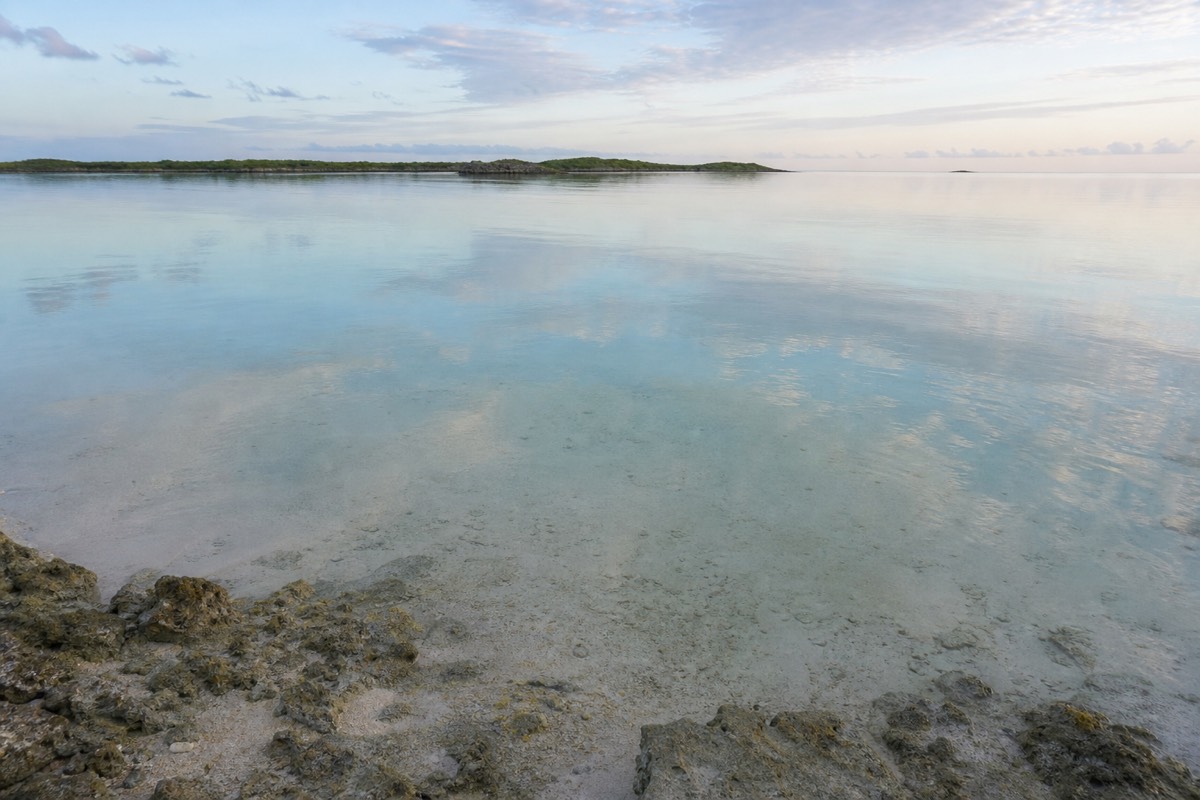
The Ministry of Agriculture proposed boundary lines, a warden on the beach and feeding restrictions, and signage and feeding troughs were installed. The Bahamas Humane Society monitors the colonies and has called for stronger protection. That is not a closed case, and anyone telling you the welfare question is fully settled is overselling. What has changed is that the guidance is now explicit and easy to follow, and the operators that run these trips brief it.
The official Bahamas tourism page on the swimming pigs sets out what to feed and how. The rules below come from that guidance, and following them costs you nothing.
| Practice | Status | Why |
|---|---|---|
| Fruit, vegetables, bread and pig feed | Approved | These are the foods the official guidance names |
| Tossing food into the water rather than onto the sand | Approved and preferred | Sand ingestion is what killed pigs at Big Major Cay in 2017 |
| Hand-feeding on the beach | Discouraged | Same reason, plus it puts your hand where the food is |
| Processed food, snacks and leftovers | Not allowed | The guidance rules them out |
| Alcohol | Not allowed | Explicitly ruled out by the guidance |
| Chasing, riding or grabbing a pig for a photograph | Never | Not in the official guidance because it should not need to be; the crew will stop you |
| Staying inside the marked boundaries | Expected | Boundary lines and a beach warden came out of the 2017 response |
Our own position is that this is an encounter worth doing carefully rather than one worth avoiding or one worth pretending is unproblematic. The welfare question gets a longer, sourced treatment on whether the pigs are treated well.
What time of year is best to swim with pigs?
March to May, with April the single best month. That window gives the calmest seas, the clearest water, warm air without the summer humidity, and it sits entirely outside hurricane season. December to February is dry and sunny but windy and busy, and September is the month to avoid outright.
Wind is what actually decides whether your trip runs. Winter cold fronts push north and northeast winds and 6 to 8 foot seas across the bank from December through March, which is exactly when cancellations cluster. Atlantic hurricane season runs 1 June to 30 November with a statistical peak around 10 September, which you can check against the National Hurricane Center's climatology data. Sargassum seaweed runs roughly March to October, worst June to August, and it is variable rather than guaranteed.
| Months | Sea and wind | Water temperature | What it means for a pig trip |
|---|---|---|---|
| December to February | Cold fronts, north and northeast winds, 6 to 8 foot seas at times | 24 to 27 C | Dry, sunny, busiest and windiest; most cancellations happen here |
| March | Fronts easing, still occasionally windy | 24 to 26 C | Improving, and the busiest month for cruise arrivals |
| April and May | Calmest of the year | 25 to 28 C | The best window; April is the single strongest month |
| June to August | Light winds, hot and humid, afternoon squalls | 27 to 29 C | Warm water and calm mornings, but the worst of the sargassum |
| September and October | Hurricane season peak around 10 September | 27 to 29 C | The window to avoid if you have any flexibility |
| November | Settling, fronts starting | 26 to 28 C | Quieter, decent conditions, hurricane season ends 30 November |
Whatever month you pick, take the morning departure. Trade winds build from mid-morning, so an 8:00 to 10:00 start gives calmer water, cooler air and fewer people at the beach club. The month-by-month detail across all activities sits in our guide to the best time to visit Nassau.
What a pig day actually looks like, stage by stage
A four-hour trip breaks into roughly 50 minutes of boat time, a short turtle stop, the pig encounter itself, lunch, and a long unstructured stretch on the beach. Written out like that, the proportions stop being a surprise, which is the point of writing it out. The stages below follow the $129 trip.
| Stage | What happens | Rough allowance |
|---|---|---|
| Check in and board | Meet at the Lukka Kairi hub in downtown Nassau, safety briefing | allow the operator's stated check-in time |
| Harbor run | Out past Paradise Island and the Pearl Island lighthouse | about 25 minutes |
| Green Turtle Cay stop | A look at the seagrass beds, weather permitting | about 10 minutes |
| The pigs | The encounter and feeding in shallow water off the beach | roughly 15 to 45 minutes |
| Lunch | Bahamian lunch and one soft drink at the beach club | the club's serving window |
| Beach time | Chairs, snorkel gear, paddleboards, Wi-Fi, restrooms | the balance of the four hours |
| Return | Back across to downtown Nassau | about 25 minutes |
The three-island tour packs the same four hours differently: Green Cay for wild turtles, about an hour of reef snorkeling at Pearl Island, then Rose Island for the pigs and lunch, with a scenic run past the Athol Island mangroves on the way home. More happens, and less of it is spent lying down.
Which pig tour should you book?
Take the $129 trip if this is your first Bahamian boat day, you are off a ship, or you want a slow beach afternoon with a pig encounter attached. Take the $195 three-island day if the turtles and a proper hour of reef snorkeling matter as much as the pigs. The Rose Island full-day is the third option and it publishes no pig stop at all.
| Tour | Price | Boat | Departure hub | Rating and bookings | Best for |
|---|---|---|---|---|---|
| Swimming Pigs and Private Beach Club Escape | $129 | 45-passenger boat | Lukka Kairi, downtown Nassau | 4.7 across 14,083 bookings | First-timers, cruise days, families who want beach time |
| Nassau 3 Islands with snorkeling, Pig Beach and turtles | $195 | 40ft speedboat | Drops back at downtown hubs | 4.2 across 29,228 bookings | People who want turtles and reef as much as pigs |
| Rose Island Full-Day Adventure | $139 | 22-passenger speedboat | Margaritaville, Paradise Island | 4.2 across 5,442 bookings | Reef and a quiet beach club, without a pig stop |
All three land on Rose Island, which has more going on than most day-trippers realize, and our Rose Island guide covers the beach clubs, the reef and the private options. If the pigs are non-negotiable, book the $129 beach-club trip or the $195 three-island day and read the inclusions line by line first.
What is not included, and what to bring
Towels are excluded on all three boats, and that catches more people than any other omission. Alcohol, cameras, gratuities and sunscreen are also outside the price on the pig trips, and the three-island tour excludes hotel pickup unless you opt in. None of it is expensive to solve if you know in advance.
The swimming pigs trip includes the round-trip boat, the pig encounter and feeding, lunch with one soft drink, snorkel gear, paddleboards and beach club access. Outside the price: towels, alcohol, cameras, gratuities and sunscreen. The three-island tour includes crew, snorkel gear and kayaks, a jerk BBQ chicken and Caribbean rice lunch, one signature rum punch and bottled water, while towels, action cameras, extra snacks and gratuities sit outside it. The Rose Island day includes snorkel gear and instruction, a light lunch of a grilled burger or hot dog with chips, the Green Cay stop and beach club and aviary access, with towels, cocktails at the TreeHouse Bar and reef-safe sunscreen all excluded.
- A towel, because none of the three provides one.
- Reef-safe sunscreen, applied before you board rather than at the beach club.
- A dry bag or pouch for a phone. Cameras are not provided and the pig stop is in the water.
- Cash for gratuities and for anything at the bar, which is never in the ticket price.
- Photo ID if you are drinking; the legal age in the Bahamas is 18.
Where did the pigs come from?
Nobody actually knows, and the confident stories you will hear on the boat are legends rather than established fact. The sailors-left-them and shipwreck-survivors versions are folklore. What is not in dispute is that the pigs are not native to the Bahamas and arrived through people, one way or another.
The Exuma colony at Big Major Cay is the famous one and the older story. The Nassau-area colonies on Rose Island, Pearl Island and Athol Island sit on cays run by beach-club operators, which is a more recent and much more commercial arrangement, and it is why the encounter here feels organized rather than accidental. Both versions involve animals that live off tourism, and pretending otherwise is not honest.
What you can say for certain is that the encounter is easy to reach from Nassau, that it lasts about as long as a coffee break, and that the day around it is what makes the ticket worth buying. If that sounds like your kind of morning, the Rose Island boat day and the two pig trips above all leave in the morning, and every price, inclusion and rating we hold sits on the full list of Nassau tours.